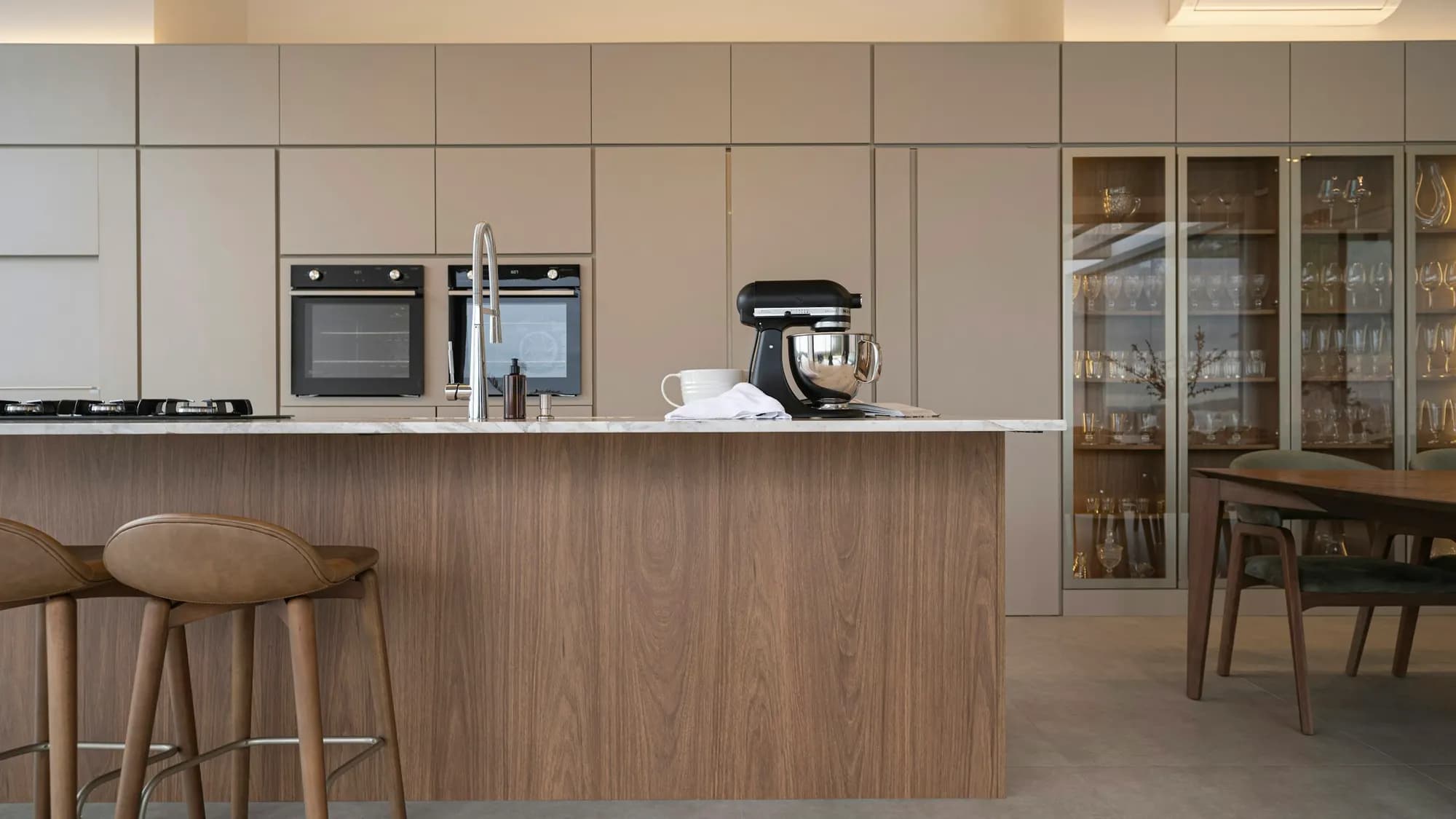

A new kitchen is one of the most considered investments you'll make in your home. Beyond choosing cabinetry, worktops and appliances, finding the right supplier can make all the difference to the finished result.
With so many kitchen companies, independent designers and bespoke manufacturers to choose from, knowing where to start isn't always straightforward.
The right supplier isn't necessarily the most expensive or the most established. It's the one whose design approach, expertise and services best suit your home, priorities and budget.
Understanding the different types of kitchen suppliers
Not all kitchen suppliers offer the same level of design flexibility, manufacturing or project support. Understanding the differences can help you narrow your search.

Specialist kitchen retailers
Specialist kitchen retailers typically offer a range of cabinetry styles, finishes and configurations, often supported by an in-house design service.
Best suited to
Homeowners looking for a well-designed kitchen with established product ranges, predictable manufacturing processes and a choice of finishes.
Consider
The flexibility of cabinet dimensions, available materials and whether installation is included.
Independent kitchen designers
Independent designers focus on creating a kitchen tailored to your space and how you live. Some work with several manufacturers, while others collaborate with specialist cabinetmakers.
Best suited to
Homeowners who value creative design, independent advice and flexibility over which products and manufacturers are used.
Consider
Whether the designer manages procurement and installation or provides a design-only service.
Bespoke kitchen makers
Bespoke kitchen companies manufacture cabinetry specifically for your project, offering greater control over dimensions, materials, detailing and finishes.
Best suited to
Unusual spaces, period properties, ambitious layouts or homeowners looking for something highly individual.
Consider
Manufacturing lead times, the level of customisation offered and whether the company manages installation.
Design and build companies
Some companies offer a wider service, combining kitchen design and installation with building work, plumbing, electrics and project management.
Best suited to
Larger renovations, extensions or projects involving structural changes.
Consider
Which services are delivered in-house, which are subcontracted and who takes responsibility for coordinating the work.
What should you look for in a kitchen supplier?
1. Relevant experience
Look beyond a supplier's most impressive photographs. Have they delivered projects of a similar size, style or complexity to yours?
A company specialising in contemporary apartments may have different expertise from one regularly working on period properties or substantial kitchen extensions.
Ask to see completed projects, ideally with examples of the design challenges involved.
2. Design approach
A good kitchen design should reflect how you use the space, rather than simply accommodate a preferred cabinet layout.
Consider how the supplier approaches storage, circulation, lighting, seating and the relationship between cooking and entertaining.
The strongest proposals should demonstrate an understanding of your priorities, not just present an attractive visual.
3. Materials and construction
Two kitchens can look remarkably similar in photographs while differing significantly in their construction.
Pay attention to cabinetry materials, door finishes, hinges, drawer systems and internal fittings.

For painted kitchens, ask whether doors are solid timber, MDF or a combination of materials. For timber finishes, establish whether you're being offered solid wood, veneer or wood-effect materials.
None of these options is automatically the best choice. Suitability depends on the application, finish, maintenance expectations and budget.
4. Installation and project management
Even beautifully manufactured cabinetry depends on careful installation.
Establish whether the supplier uses its own installation team or independent contractors, and who is responsible for site measurements, coordination and resolving problems.
For projects involving builders or architects, clarify who manages the interface between kitchen installation and the wider works.
5. Aftercare and guarantees
Ask what happens after installation.
Understand which warranties apply to cabinetry, worktops, appliances and installation, and whether the supplier provides a practical route for resolving any issues.
A lengthy guarantee can be reassuring, but the details of what it covers matter more than the headline number.
How to compare kitchen proposals
Kitchen quotations are rarely presented in exactly the same way, making direct comparisons surprisingly difficult.
One supplier may include appliances, worktops and installation, while another quotes for cabinetry alone.
Before comparing prices, establish what's actually included.
| Area | What to compare |
|---|---|
| Design | Layout, drawings, revisions and design fees |
| Cabinetry | Materials, construction, finishes and internal fittings |
| Worktops | Material, thickness, templating and installation |
| Appliances | Brands, models and whether supply is included |
| Installation | Fitting, plumbing, electrics and associated works |
| Project management | Site coordination and responsibility for delivery |
| Aftercare | Guarantees, adjustments and remedial work |
The lowest quotation isn't necessarily the best value. A more comprehensive proposal may include services that would otherwise need to be arranged and paid for separately.
Equally, a higher quotation doesn't automatically indicate better quality.
The aim is to compare proposals on a consistent basis, considering both the finished kitchen and the service required to deliver it.
Questions worth asking before you commit
Before selecting a supplier, it's worth establishing a few important details:
- Have you completed projects similar to mine?
- Which elements of the kitchen are made to order?
- What materials and construction methods do you use?
- What is included in your quotation?
- Who will manage the installation?
- What are your expected design, manufacturing and installation lead times?
- How are changes and additional costs handled?
- What guarantees and aftercare do you provide?
Clear answers at this stage can prevent misunderstandings later.
Choosing a supplier that fits your budget
A well-defined budget helps suppliers recommend appropriate designs, materials and services from the outset.
However, kitchen costs vary considerably depending on cabinetry, worktops, appliances, installation and any associated building work.
Rather than focusing exclusively on a headline figure, consider which elements matter most to you.
You may prefer to invest in bespoke cabinetry while choosing more understated appliances, or prioritise specialist worktops and a particularly considered layout.
The right supplier should help you understand where your budget will make the greatest difference.
For a more detailed breakdown, read our Kitchen Cost Guide.
A simpler way to discover kitchen suppliers
Finding the right kitchen supplier traditionally involves researching companies, arranging consultations and repeating your requirements to each one.
Briefed offers a different approach.
Create one brief outlining your project, preferences and budget, then receive proposals from suppliers interested in your project.
Your identity remains private while you explore your options, allowing you to consider different approaches without unwanted sales conversations or uncomfortable budget discussions.
Briefed uses AI to help rank proposals by their suitability for your requirements, making it easier to identify the most relevant options.
When you're ready, you decide which suppliers you'd like to connect with.
Discover kitchen suppliers, or see how Briefed works.
Share your plans. We'll simplify the search.
Frequently asked questions
Not necessarily. Independent designers can offer flexibility and a broader choice of manufacturers, while established kitchen companies may provide a more integrated design, supply and installation service. The best option depends on your project and how much support you need.
A fitted kitchen is designed to fit a particular space, often using standard or modular cabinetry. A bespoke kitchen typically involves cabinetry manufactured specifically for the project, allowing greater freedom over dimensions, materials and detailing.
Yes. Comparing proposals from multiple suitable suppliers can help you understand different design approaches, specifications and pricing. Make sure you're comparing similar scopes of work.
Some include installation within their service, while others quote separately or recommend independent installers. Always confirm exactly what's included and who is responsible for the finished installation.
For a straightforward replacement, allow time for design, revisions, manufacturing and installation. For bespoke kitchens or projects involving extensions and building work, engaging a supplier earlier can help ensure the kitchen design is properly coordinated with the wider project.
Yes. With Briefed, you can share your project requirements anonymously and review supplier proposals before deciding who you'd like to connect with.