A new kitchen is one of the most exciting investments you can make in your home. But understanding what it might cost, and what you can expect for your budget, isn't always straightforward.
From beautifully designed fitted kitchens to individually crafted bespoke designs, there are plenty of options to explore. The challenge is knowing where to begin, which suppliers are right for your project and how to make the most of your budget.
In this guide, we look at typical kitchen costs in the UK, what influences the price and what to consider before choosing a supplier.
How much does a new kitchen cost in the UK?
Kitchen costs vary considerably depending on the size of your space, the materials you choose, the appliances you select and the level of customisation involved.
According to Checkatrade's 2026 bespoke kitchen cost guide, bespoke kitchens can cost between £20,000 and £75,000, depending on the specification.
For homeowners considering a professionally designed kitchen, the following indicative budgets provide a useful starting point:
| Kitchen type | Indicative budget |
|---|---|
| Quality fitted kitchen | £20,000–£35,000 |
| Design-led fitted or semi-bespoke kitchen | £35,000–£60,000 |
| Fully bespoke kitchen | £60,000–£100,000+ |
These are illustrative planning ranges, not national averages. They assume cabinetry, worktops, appliances and installation, but exclude significant structural alterations.
A larger budget doesn't automatically mean a better kitchen. Thoughtful design, well-chosen materials and the right supplier can make a significant difference to the finished result.
Quality fitted kitchen
£20,000 – £35,000
Design-led fitted or semi-bespoke kitchen
£35,000 – £60,000
Fully bespoke kitchen
£60,000+
Indicative planning budgets for a professionally designed and installed kitchen, not national averages.
What affects the cost of a new kitchen?
1. Cabinetry and design
Cabinetry is often one of the largest elements of your kitchen budget.
Fitted kitchens use established cabinet sizes and designs, offering a wide choice of styles, finishes and configurations.
Semi-bespoke kitchens provide additional flexibility, allowing you to tailor certain dimensions, finishes or storage solutions.
Fully bespoke kitchens are individually designed and manufactured, offering greater freedom over materials, dimensions and detailing.
The best option depends on your space, your priorities and how much customisation you need.
2. Worktops and materials
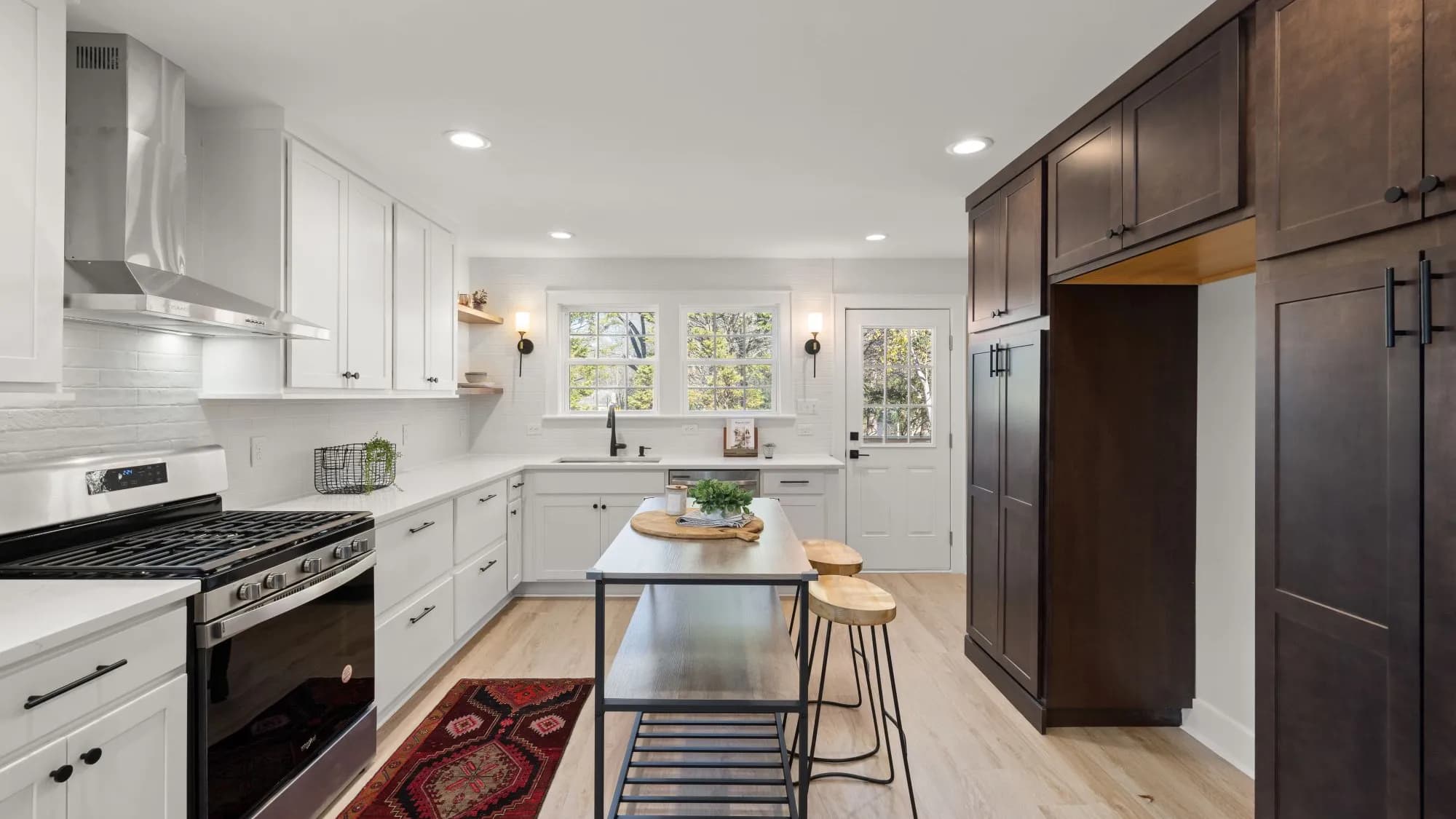
Worktops play an important role in both the appearance and practicality of your kitchen.
Quartz, porcelain, granite and natural stone all offer different characteristics, with prices varying according to the material, thickness and complexity of installation.
According to the 2025 Houzz UK Kitchen Trends Study, 92% of the homeowners surveyed upgraded their worktops during a kitchen renovation, demonstrating just how central this choice is to a new kitchen.
of surveyed homeowners upgraded their worktops during a kitchen renovation.
When choosing materials, consider not just how they look, but how they'll perform in everyday life.
3. Appliances
Appliances can make a considerable difference to your overall budget.
Integrated refrigeration, induction hobs, combination ovens and specialist cooking appliances all come at different price points.
Some homeowners prioritise professional-grade cooking equipment, while others prefer discreet integrated appliances that complement the overall design.
Deciding where to invest and where to be more selective can help you achieve the right balance.
4. Layout and installation
Keeping your existing kitchen layout can help manage costs, particularly where plumbing and electrical services can remain in place.
Changing the layout, introducing a kitchen island or relocating appliances may involve additional work.
Research published by Which? suggests that labour can account for approximately 20–30% of kitchen expenditure, making installation an important consideration when comparing quotations.
20–30%
of kitchen expenditure is typically installation labour.
This assumes you don't carry out any of the installation yourself. Indicative only.
5. Finishing details
It's often the finishing touches that bring a kitchen together.
Thoughtfully designed storage, integrated lighting, distinctive handles, open shelving and carefully chosen finishes can make a real difference.
These details don't always require a significant additional investment, but they benefit from being considered early in the design process.
Where should you spend and where can you save?
A successful kitchen isn't necessarily about spending more. It's about investing in the elements that matter most to you.
Worth investing in
- Well-constructed cabinetry and quality fittings that will withstand daily use.
- A practical layout that works for the way you live.
- Durable worktops and surfaces suited to your lifestyle.
- Appliances you'll use regularly.
- Experienced design and installation.
Where you might be more selective
- Specialist finishes that add cost without improving functionality.
- Bespoke cabinetry in areas where standard dimensions work equally well.
- Appliances with features you're unlikely to use.
- Changing plumbing and electrical layouts unnecessarily.
A good kitchen designer should help you understand these trade-offs and create a design that makes the most of your available budget.
What costs should you allow for beyond the kitchen itself?
It's important to understand exactly what's included in a kitchen quotation.
Depending on your project, additional costs might include:
- Removal and disposal of your existing kitchen.
- Plumbing and electrical alterations.
- Flooring, tiling and decorating.
- Lighting and specialist fittings.
- Building or structural work.
- Design and project management fees.
Some suppliers provide a comprehensive service, while others focus on design and cabinetry, leaving you to arrange installation or building work separately.
Before comparing proposals, make sure you're comparing the same scope of work.
How do you choose the right kitchen supplier?
Finding the right supplier is about more than choosing a kitchen you like the look of.
Different kitchen companies specialise in different styles, budgets and levels of service. Some offer complete design and installation, while others focus on bespoke cabinetry or specialist finishes.
Before approaching suppliers, it helps to have a clear idea of:
- Your preferred style and materials.
- The approximate size and layout of your kitchen.
- Your overall budget.
- Any particular features or appliances you'd like.
- Your ideal project timescale.
Having these details ready makes it easier to identify suppliers who are well suited to your project and compare their proposals.
A simpler way to discover your next kitchen
Finding the right kitchen supplier can take time. Between researching companies, visiting showrooms and explaining your requirements, it's easy to spend weeks exploring options without knowing which are the best fit.
Briefed offers a different way to begin.
Share your plans, preferences and budget in one private brief, and discover kitchen specialists interested in your project.
Suppliers can present their proposals for you to explore, helping you compare suitable options without contacting multiple companies individually.
Your identity remains private until you choose to connect, so you can explore ideas and budgets without unwanted sales conversations.
Find out how Briefed works, or explore our kitchens page.
Share your plans. We'll simplify the search.
Frequently asked questions
The cost depends on the size, specification and level of customisation. For a professionally designed and installed kitchen, budgets of £20,000 to £60,000 can offer a range of fitted and semi-bespoke options, while fully bespoke projects may cost considerably more.
Bespoke cabinetry offers greater flexibility over dimensions, materials and detailing. It can be particularly valuable in unusual spaces or where you have specific design requirements, although a high-quality fitted kitchen may be equally suitable for many homes.
Installation costs vary depending on the complexity of the design and any associated plumbing, electrical or building work. Always check whether installation is included in your supplier's quotation.
Absolutely. Many established kitchen companies offer beautifully designed fitted and semi-bespoke ranges with excellent materials, finishes and storage options.
The process can take several weeks to several months, depending on the supplier, manufacturing lead times and whether building work is required. Bespoke kitchens typically require longer lead times.
Start with a consistent brief covering your budget, preferred style, requirements and timescale. Compare not only the overall cost, but also the materials, services, installation arrangements and what's included in each proposal.